Institute of Space and Design
The degree programmes of the Institute of Space and Design at Kunstuniversität Linz are concerned with the design of the lived-in, built and constructed environment: “Architecture”, “Industrial Design”, “space&designstrategies” and “Fashion & Technology”.
The combination of these programmes and fields of knowledge offers students a wide range of courses and classes, releases unusual synergies and is a USP of Kunstuniversität Linz. Students from all over the world as well as international networks make the curricula of the Institute attractive partners for manifold projects and co-operation ventures with institutions active in the areas of art and culture, politics, industry and business. All four disciplines of study convey both basic and specialist knowledge through the project-oriented problems and questions addressed. Potential answers are verified and contextualised in interdisciplinary fashion, taking account of their technical, economic, ecological, social, artistic and cultural consequences. The University’s workshops, which are excellently appointed and supervised, ensure the successful interlinking of vision and realisation. Each of the degree programmes offers unique focuses and individual tutoring within the context of small teams.
The combination of these programmes and fields of knowledge offers students a wide range of courses and classes, releases unusual synergies and is a USP of Kunstuniversität Linz. Students from all over the world as well as international networks make the curricula of the Institute attractive partners for manifold projects and co-operation ventures with institutions active in the areas of art and culture, politics, industry and business. All four disciplines of study convey both basic and specialist knowledge through the project-oriented problems and questions addressed. Potential answers are verified and contextualised in interdisciplinary fashion, taking account of their technical, economic, ecological, social, artistic and cultural consequences. The University’s workshops, which are excellently appointed and supervised, ensure the successful interlinking of vision and realisation. Each of the degree programmes offers unique focuses and individual tutoring within the context of small teams.
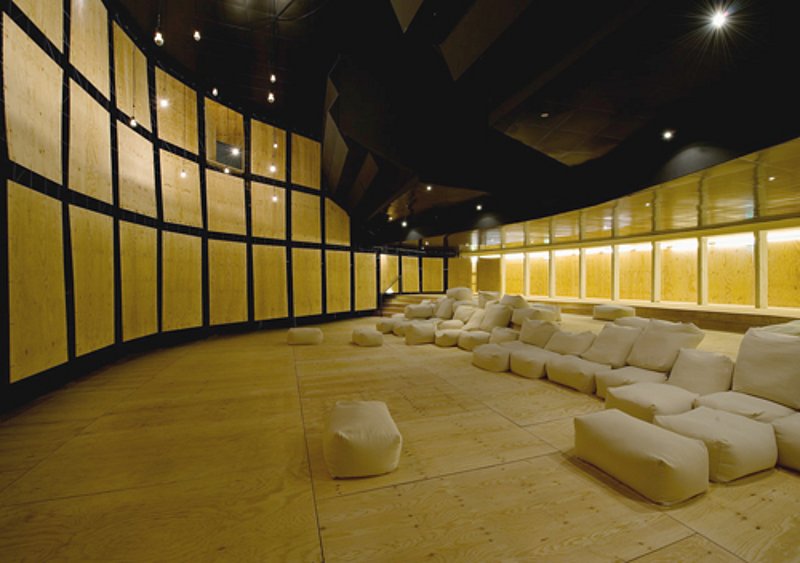
The architecture programme comprising chairs for Architecture, Ubanism and Sustainable Architecture+Spatial Tactics offers a Bachelor curriculum with basic courses that leads up to a Master curriculum with the possibility of specialising in a variety of fields, above all in wood and timber construction (university diploma course “überholz”), architecture in developing countries (university diploma course “BASEhabitat”) and sustainability.

Industrial Design focuses on the design and development of serial, innovative products and product systems with a focus on people, technology and social developments. Industrial designers as creative, innovative specialists on the one hand and as interdisciplinary generalists on the other are decisive for the emotional, economic and social value of products. Industrial design is therefore an essential part of strategic and user-oriented product development.
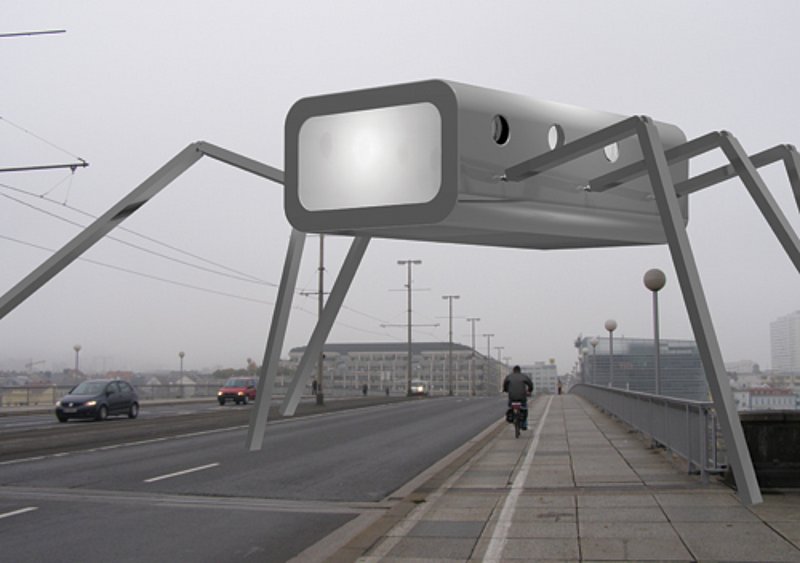
space&designstrategies, a new discipline set up in 2003 and unique in Europe, offers a curriculum at the interface of architecture, art, design and digital media. Phenomena in both real and virtual space are analysed, defined and implemented. A characteristic of this integrated, project-based programme is that practical projects are already implemented during the study course.

Fashion & Technology The world of fashion is currently undergoing a dramatic change. Fashion is increasingly becoming a disposable product manufactured under inhuman conditions, with production cycles that become obsolete in no time. The idea of fashion in combination with technology is quickly raising questions of privacy, body optimisation or ecology. The aim of the training is to prepare the students for the newly emerging requirements and professional profiles in the intertwined area of fashion and technology.
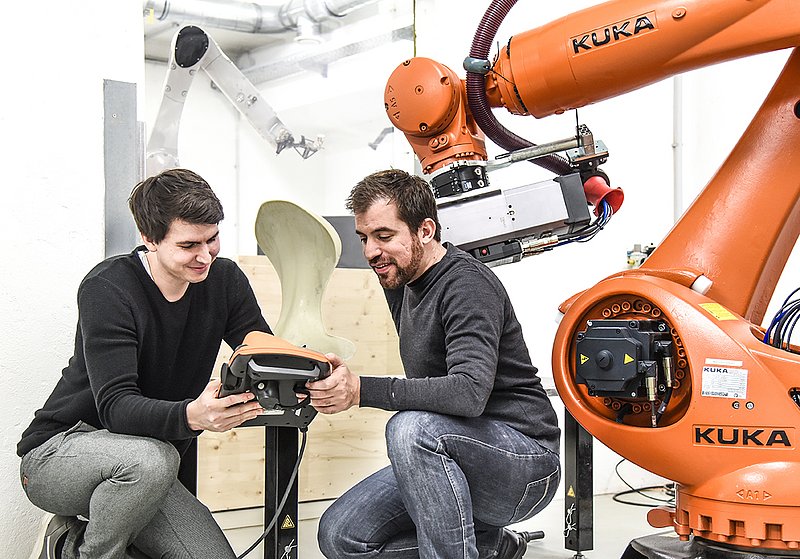
Labor Kreative Robotik
Das neue Labor für Kreative Robotik an der Kunstuniversität Linz steht allen Studienrichtungen im Rahmen der forschungsgeleiteten Lehre offen: Während Industriedesigner*innen mit Robotern Prototypen bauen, entwickeln Studierende der „Zeitbasierten Medien“ interaktive Roboterinstallationen und Grafik-Studierende erforschen neue Darstellungsmethoden, die so nur ein Roboter realisieren kann. Roboter werden hier nicht nur als Fertigungsmaschinen, sondern als vielfältige Schnittstelle zwischen der digitalen und der physischen Welt gesehen. Die Maschine wird zum integrierten Teil des Designprozesses.
Das neue Labor für Kreative Robotik an der Kunstuniversität Linz steht allen Studienrichtungen im Rahmen der forschungsgeleiteten Lehre offen: Während Industriedesigner*innen mit Robotern Prototypen bauen, entwickeln Studierende der „Zeitbasierten Medien“ interaktive Roboterinstallationen und Grafik-Studierende erforschen neue Darstellungsmethoden, die so nur ein Roboter realisieren kann. Roboter werden hier nicht nur als Fertigungsmaschinen, sondern als vielfältige Schnittstelle zwischen der digitalen und der physischen Welt gesehen. Die Maschine wird zum integrierten Teil des Designprozesses.
Designforschung und Designtheorie
Innerhalb der Professur für Designforschung und Designtheorie steht die experimentelle Generierung von Wissen im und durch das Design im Vordergrund. Ein dynamisches Zusammenspiel zwischen analytisch-systematischer Erkundung und pragmatisch-angewandter Gestaltungspraxis charakterisiert den Kern dieser Bemühungen. Ein besonderer Wert wird auf zukunftsorientierte, praxisbasierte Forschung gelegt, wobei gleichzeitig Einblicke in vergangene und aktuelle theoretische Diskurse geboten werden.
Head of Institute
Univ.-Prof. Mag. art. Ute Ploier
Deputy Head of Institute
Univ.-Prof. Dr. Christiane
Luible-Bär
Univ.-Prof. DI PhD. Michael Zinner
Contact
Gertraud Kliment
Hauptplatz 6, 1st floor
T: +43 (0) 732 7898 2470
M: +43 (0) 676 84 7898 393 Mag.art. Teresa Galen
Tabakfabrik Linz, Peter-Behrens-Platz 10
M: +43 (0) 676 84 7898 588 Office hours
Mon-Thu: 9 to 11.00 a.m.
institut-rud.office@kunstuni-linz.at
Kunstuniversität Linz
Institute of Space and Design
Hauptplatz 6
4020 Linz | Austria
Univ.-Prof. Mag. art. Ute Ploier
Deputy Head of Institute
Univ.-Prof. Dr. Christiane
Luible-Bär
Univ.-Prof. DI PhD. Michael Zinner
Contact
Gertraud Kliment
Hauptplatz 6, 1st floor
T: +43 (0) 732 7898 2470
M: +43 (0) 676 84 7898 393 Mag.art. Teresa Galen
Tabakfabrik Linz, Peter-Behrens-Platz 10
M: +43 (0) 676 84 7898 588 Office hours
Mon-Thu: 9 to 11.00 a.m.
institut-rud.office@kunstuni-linz.at
Kunstuniversität Linz
Institute of Space and Design
Hauptplatz 6
4020 Linz | Austria